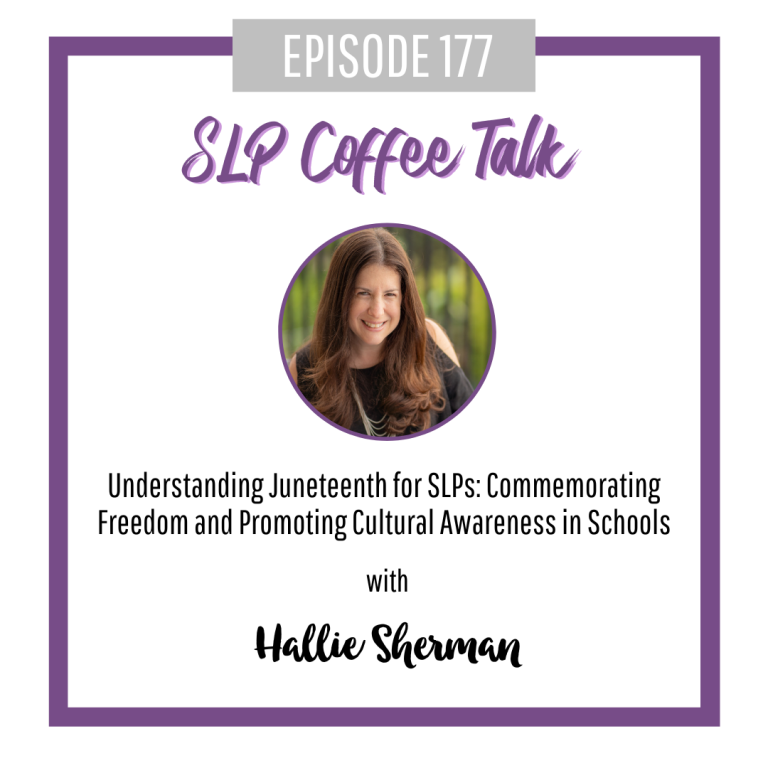
280: Considering Teletherapy? How to Make Teletherapy Work
Show Notes:
What do you get when you mix a surprise preemie, a fearless career pivot, and a whole lot of neon stickers? You get Ellie Richter, the powerhouse SLP behind The Essential Teletherapist—and she’s here to spill all the virtual tea.
In this feel-good (and laugh-out-loud honest) convo, Hallie Sherman chats with Ellie about ditching the traditional grind, setting boundaries like a pro, and building a thriving teletherapy practice that serves both kids and clinicians. If you’ve ever questioned if teletherapy can be fun, effective, and sustainable—this episode’s your permission slip to go all in.
Here's what we learned:
- How a personal health scare pushed Ellie to build a flexible, virtual private practice
- Why underserved districts need teletherapy—and how SLPs can make a real impact
- The secrets to successful group teletherapy (spoiler: two’s company, five’s a hot mess
- What tools Ellie swears by for articulation therapy and student engagement
- Creative ways to build connection, confidence, and buy-in from students
- How Ellie empowers students by letting them choose their themes—and why it matters
- Tips for advocating with school contracts and setting non-negotiable boundaries
- Why teletherapy isn’t a backup plan—it’s a bold career move
RESOURCES
Learn more about Ellie Richter:
Website: www.theessentialteletherapist.com
Instagram: https://www.instagram.com/theessentialteletherapist/
Facebook: https://www.facebook.com/profile.php?id=61566987832697
Spotify: https://open.spotify.com/show/1Ps9xDECWXs6nlekB73hys?si=803a140cc3194911
Learn more about Hallie Sherman and SLP Elevate:
🎧 Check out the Secondary Secret Podcast here!
JOKE OF THE WEEK:
Q: What kind of sandals do frogs wear?
A: Open toad sandals

Where We Can Connect:
Subscribe & Review on Apple Podcasts
Are you subscribed to the podcast? If you’re not, I want to encourage you to subscribe today so you don’t miss any future episodes! I already have so many amazing guests and topics lined up, I would hate for you to miss a single one! Click here to subscribe on Apple Podcasts.
Could I ask a big favor? If you are loving the podcast, I would LOVE it if you would leave me a review on Apple Podcasts. I read each and every review. Plus, you get to pay it forward because it will allow other teachers like you to find the podcast! Wondering how to leave a review? Click here to review, then select “Ratings and Reviews” and “Write a Review”. So easy and so appreciated!
Do you have a question you would like me to answer on the podcast?
GREAT! CLICK HERE TO FILL OUT THE FORM!
TRANSCRIPT
00:00:00 Where are my CFYs at? All my brand new grads entering into your CF year, you are probably filled with all of the emotions. Excitement, overwhelm, uncertainty, excitement again, you're getting paid. Woohoo! But if you're feeling a little unsure or having some questions, maybe a little doubt, I have a free training coming up just for you on Wednesday, July 2nd, at noon, Eastern Standard Time. I'm hosting a free training for CFs. Whether you're maybe finishing up your CF or even if you're just starting it or gonna be starting it very, very soon, this training is for you. It is free. Free, free, free. Head to speechtimefun.com/CFbootcamp. Sign up and claim your spot. There are limited spots available. So you wanna make sure you register for your spot ASAP, okay? July 2nd, it's a Wednesday at noon Eastern Standard Time. It is a free live event where we're be talking all about how to get the most out of your CF year. And I cannot wait to see you there. Onto the episode.
0:01:18 Hallie: Welcome to SLP Coffee Talk, the podcast designed exclusively for speech language pathologists who work with older students, grades 4 through 12. I am your host, Hallie Sherman, your SLP behind Speech Time Fun, the Speech Retreat Conference, and the SLP Elevate Membership. And I'm thrilled to bring you conversations, strategies, and insights that will give you the jolt of inspiration that you need. Whether you're tuning in during your morning commute, on a break in between sessions, or even during a well-deserved relaxation time. I am here for you each and every week. Let's do this, SLPs.
00:01:58 Hallie: Hey, hey, and welcome to another episode of SLP Coffee Talk. Do you work via teletherapy or thinking about it? This episode is for you. I have Ellie Richter here. Welcome to the show.
00:02:11 Ellie: Thanks for having me. I'm excited to connect today.
00:02:13 Hallie: Tell everyone a little bit about you and your SLP journey, to what you are doing now.
00:02:19 Ellie: Sure. I have been working for about 15 years, have always worked in person. I've gone into homes, done home health. I've worked in nonprofits, and when 2020 happened, I got my feet wet with virtual services. Begrudgingly, I did not want to do it. And then it's become kind of a passion of mine to make virtual services highly effective and fun for both parties.
00:02:45 Hallie: And now you are doing it via your own private practice.
00:02:49 Ellie: Yes, I have my own private practice. It's called the Essential Teletherapist. I work with schools doing bilingual evaluations and direct therapy services. I work across state lines in states like Illinois and Minnesota while I live in St. Charles, St. Louis, Missouri area. I do a little bit of in-person with the schools here, but mostly I work full-time virtually in other states.
00:03:15 Hallie: Awesome. So for those that are not familiar with teletherapy, because I was not someone from New York, where there's a million speech therapists. You know, we can easily get a speech therapist hired by the district, or if not, an agency to fill in the gaps. What's some benefits working like, you know, for teletherapy?
00:03:34 Ellie: Sure. So, from the perspective of a school district, most of the school districts I work with are underserved with lower resources, and it's really hard to find high-quality providers in those areas. I've worked in very rural districts in Minnesota and Illinois. It's very hard to find people to come in person full-time. So, a lot of times I will either step in and take part of a caseload or I might be the only speech therapist there for a little bit. I kind of bebop around to different districts depending on people's needs, either doing maternity leaves or like a bilingual coverage. I'll handle that for bits of time.
00:04:17 Ellie: But then also from the SLP's perspective, I feel like as I've gotten older and my family life has changed, we've had a variety of health situations arise in our family. So for me, it's allowed me to continue working at a capacity that I want to do for my career while also kind of respecting my body boundaries and what I can manage. So it's kind of been great for the school districts who need support, and it's been great for me to allow me to keep working while I've kind of recovered and gone through just health situations in general. So.
00:04:56 Hallie: How did you decide what states to get licensed in and what states to provide the services for?
00:05:03 Ellie: Sure. In Missouri, I haven't found as much support for virtual services, or maybe not support, but maybe not as much of a need for virtual services in Missouri. I'm sure there is a need. It hasn't come my way, which is fine. I initially went to Illinois to cover a friend's maternity leave. So I did get licensed in Illinois for that specific reason. Illinois was very difficult to get licensed in. And then Minnesota, I worked for a different virtual company a few years back. And so to fulfill their needs, I got licensed there. But I am anxiously awaiting the interstate compact to come through. So hopefully we don't have to get a variety of licenses to maintain.
00:05:52 Hallie: I can't imagine how to like dates and requirements and all that fun stuff.
00:05:59 Ellie: I'm very nervous about it.
00:06:01 Hallie: What made you decide? Because you mentioned that you were working for another company. What made you decide to branch out and go off on your own?
00:06:08 Ellie: Yeah. So what happened was I actually had a baby, and she came two months early, and that kind of threw me for a loop, thinking, okay, I will probably only ever make what I'm making now for the rest of my career if I stay where I am. And if I want to kind of secure a better financial future for my kids. And if something like this ever happened again, where we are in this medical emergency, what am I going to do to provide for my family that is more sustainable and allows me more freedom and peace and calm, and financial stability? And so I was on my journey to leave, and I told my husband, I was like, I think I have to quit my job. And I think I have to work for myself and kind of bet on myself and do something different to allow me to support our family financially, but also time wise. And it was just such a wild time, but he was like, okay, we can make this happen.
00:07:08 Ellie: It was kind of nerve-wracking at first going out on my own because you're waiting. It's so much waiting. You're working, that you're not seeing the fruits of your labor. And then finally contracts come through, and you're like, oh, I didn't bamboozle my family. It's okay. Things are working really well. So that's kind of how I decided to go out on my own is I needed to think long term about my family and my career, and kind of how they intersect.
00:07:32 Hallie: And I love it that you said that, you know, I might not have seen the results right away, but I had it look long term and I had to just stay positive and knowing that there's so many people doing it now and proving that it's possible and there's so many resources available on how to start and how to learn about contracts and things like that. Like you're not alone.
00:07:51 Ellie: No, not at all. Not at all. There's such a great network of people, and I would say I have about five or six close SLPs across the country, and we talk every single day about business and our caseload, and how to do things well, and kind of how to problem solve things. So I feel like I have a really strong support network, and they're not all here with me. I think I have two people nearby that are very helpful, but most of these people live in other states across the country, and we're all just doing our own little niches in private practice. I would say, myself and one other person in this group are virtual. The rest are in person.
00:08:38 Hallie: Interesting
00:08:39 Ellie: So we have a variety. Yeah.
00:08:40 Hallie: Not even all virtual. Wow. I love it. And the community is essential, especially working teletherapy. You're home. You're not having a coworker next door, other than maybe your husband, to vent to. But like, there's no one who gets it. So it's so important.
00:08:57 Ellie: Absolutely. Yes. I love working from home, but I don't feel like I'm alone because I'm talking with people all day. I don't count my student interactions as talking.
00:09:09 Hallie: No, it's working.
00:09:13 Ellie: I feel like you have to be on. And I feel like the communication that I have with my peers when I'm not on feel like is more soul-fulfilling. So that's what I count as my social interactions.
00:09:29 Hallie: What are some things that you worried about when you first, like, well, let's go back to just teletherapy in general. What you worried about when you first started working with teletherapy that you wish you could tell your past self, like, this is how you do it. What are some things you struggled with back then?
00:09:47 Ellie: The things I struggled with back then was learning how to communicate with professionals who weren't in my field about business concepts and how to explain what would be best for our professional relationship. Because a lot of times they're getting, I'm thinking specifically of special education directors and kind of explaining how virtual speech therapy works and how to make it high quality and how there are some things that we really need to emphasize and focus on and make a priority for this to be a successful partnership. And I'm thinking, privacy, not doing things in a hallway or under the bleachers. I had to have—
00:10:34 Hallie: Stop that has happened. I'm assuming that you would mention that.
00:10:37 Ellie: Yeah. And like having to explain that if I'm gonna have a group of speech therapy students, they have to have their cameras on. I can't do speech therapy with four black boxes because I take data cause I don't know who's speaking and I've had to have very explicit conversations about that, that I didn't realize I'd have to… I didn't realize I had to communicate that. I thought… I assumed everyone was on the same page, but I've learned that I've had to be very explicit in what my needs are and that's been very challenging for me.
00:11:14 Hallie: Interesting. And I'm assuming that it was probably challenging to have those conversations in the beginning, but as you started doing it more often, you became much more comfortable with it.
00:11:24 Ellie: Now it feels great. I mean, I've had to end a contract over some of this stuff and that was, I was sick to my stomach over that, but I've had to establish boundaries, professional boundaries and work boundaries, truthfully for my benefit as well as the students' high quality services benefit. And when they're not being met, I can't be liable for those choices. So I've learned how to create contracts and cancel contracts. And it has just made me sick, but I feel very confident now in how to do that in a professional manner.
00:12:01 Hallie: I wanna talk more about providing teletherapy in a group. Can you talk more about that? I mean, I only did it during COVID times. So that was like desperation and they were just excited to see people. And I honestly just, it was just, you know, checking a box to say I did it. It wasn't effective therapy whatsoever. So I wanna know how… talk about like, what does it look like? How do you structure it? Tips and tricks to make it not make you wanna pull your hair out.
00:12:31 Ellie: Sure. So my max group is two. If I'm going to have the best sound quality and the best visuals for my students, I really prefer to only have two students sharing one computer. Some people like to have students on separate computers with headphones. That can work. I'm not saying it doesn't work. The places that I've been where we've done that, they will… they'll reach over and they'll goof around with the other persons to see their hand come through the other screen. All that kind of stuff. So I'm like, let's just… just share one computer, don't wear headphones because it's another tactile thing. So for me, that's my preference in groups and it works perfectly well virtually. So I'm talking about groups of two students doing virtual services.
00:13:17 Hallie: And have you had districts that say their IEP say five or three or whatever like add more.
00:13:24 Ellie: What I found is they will try to squeeze in more. And this is actually one of the reasons I've had to skedaddle from a contract is they wanted me to see as many students as possible and they would throw them all in a group and no one was getting high quality services to the degree that I was hoping for. So we were making very slow progress and we had to have some conversations about that. It's just not effective when you're looking at how to give high quality virtual services. Groups greater than two can be very difficult. Making sure everyone is included and participating and then data collection is very difficult in groups greater than two. And that's just my opinion.
00:14:17 Hallie: No, that's amazing. But it's amazing that you're like setting those boundaries and saying, sorry, this is it. If you want the service, I'm here to provide it. This is what you're going to get. It's in the best interest of the kids on top of it.
00:14:30 Ellie: Yeah, I'm happy to group, just not in groups greater than two.
00:14:34 Hallie: I'm curious about articulation therapy via teletherapy. Any tips for making sure it's still effective?
00:14:41 Ellie: So I do not have a problem with articulation therapy virtually. And I see a lot of this in the Facebook groups. People have difficulty hearing different sounds. I'm gonna be very honest with you. When I went all in for virtual services, I bought an iMac and it has the best sound quality. And I was an IBM girl. My dad worked for IBM his entire career. I grew up, we were only allowed to have those products. And when I started my private practice, my husband did all this research on best sound quality and I do have headphones. They're around here. I have my headphones. They're white. They've got a boom mic and everything, but I haven't had to use them since I had my iMac. And I mean, the sound quality is amazing. I don't have trouble hearing these different sounds and people will say, well, how do you even know that? I have a parent that's with me who sits back there. We compare information and I can hear everyone on the computer as if they're in the room with me. So I love it.
00:15:46 Hallie: And interesting you say that because I remember that was one thing that I've seen a lot in Facebook groups is like, you know, what tools and things do I need for teletherapy? And it's like it's almost as if that person's in front of you do exactly what you would do if that person was in front of you. Can you tell us a little bit more about that?
00:16:05 Ellie: Yeah, it is therapy as you know it. The difference is the digital literacy that you have to go with it. And I think that can be a learning curve for people. But we have all of these resources at our fingertips online. I mostly use digital resources, but I do have a variety of things that I pull in my office. Let’s say I have a pompom that I have here. It's actually in speech time fun colors, which is kind of funny. I have a pompom. So when people get things right, I've got my pompom and we're cheering them on. But I have a document camera that I use occasionally for my younger students, for the books that I have that I don't have digital versions of those books. Those are kind of the things I use. I feel like my specialty has always been the younger children, elementary and younger. So I am very prepared for all of that. I have found that I've been needed in the middle and high school periods much more over the past couple of years, which was new to me. I didn't know what I was doing. So I will say I do use SLP Elevate materials daily for my middle and high school kids. And that's been a game changer, mostly because they get to pick the theme. I let them pick whatever theme they want. We don't really follow the months. I'm just like, which topic would you like?
00:17:31 Ellie: And then you have it organized so well for the literacy part of it, which is a lot of what my students are working on, is kind of understanding what they're reading. So that's a lot of what I use right now when I'm in the middle to high school phase. That's my era.
00:17:38 Hallie: So you said you use a lot of the digital resources. What are your go-tos like and how are you using it via teletherapy?
00:17:54 Ellie: Yeah. So, I have my external hard drive and I keep it all in my external hard drive. I pull it up. I let them pick. I always start with the background knowledge. I love the videos that you've chosen. I like to do those little background knowledge. We talk about, we do a walkthrough of like, what do you know? And then I'll screen share. I'll either upload something. I use… I'm blanking on the app that I use. It starts with K.
00:18:18 Hallie: Kami?
00:18:19 Ellie: Yes, I use that as-
00:18:20 Hallie: K-A-M-I, guys. It's a Chrome extension.
00:18:23: Ellie: Yes, the Kami Chrome extension, we use that to type. Or if I wanna use like graphics for something on, on one of the documents, I'll put it into Canva and we'll kind of alter it with some elements in there to make it their own for the story. Like if we're doing what the setting is or something like that, we'll have fun kind of picking out different pictures to put on there. But pretty much Kami and Canva are what I use to make some of those documents editable virtually, if that makes sense for them.
00:18:58 Hallie: Yes, because most teletherapists think they have to use digital games, digital resources. So it's digital for it to be digital, and a PDF is digital. It's on a computer.
00:19:13 Ellie: Yes. We use PDFs every day and it works. Now, I had trouble screen sharing, but that was only because I realized that I had 9,000 photos on my desktop. So I just offloaded all my photos to my hard drive. And so now we're back in screen share business but-
00:19:30 Hallie: What have been some favorite themes of your students?
00:19:32 Ellie: I loved the Ice Hotel one. We did Beyond the Freeze. We did the Ice Hotel. We've recently been doing strange plants and insects.
00:19:42 Hallie: A good one.
00:19:43 Ellie: Huge fan of the pitcher plant. That has gone over really well when the mice… the mouse goes in. We've done that one. Recently, we're doing the Spring Forward, so some of my students have wanted to know about prom. So we've been doing that. I have… these are like sixth and seventh graders, so they have different types of school dances. They haven't quite gone into the prom realm, but they are aware of what it is. They just don't know some of the vocabulary. So it's been kind of fun talking about boutonnieres, corsages, limousines, things like that. Those are the ones that we've done recently. I will say overall, though, my favorite one is the international snacks.
00:20:28 Ellie: like hands down, I think my per professional and I love that one. And we did that with our high school students.
00:20:34 Hallie: I love that. I also love the young entrepreneur one.
00:20:38 Ellie: Yes! We've done that too..
00:20:39 Hallie: I ordered the lollipops like.. Even with my own children, they were into it like that. And learning about these 12 year olds, 14 year olds who invented different things. And then it was like, we started brainstorming what things can we invent that could be a job or something one day or change.
00:20:59 Ellie: That was a.. That was a really important topic. And I want you to know that because the school that I was working on, the school that I was working in when we did that topic has low resources, the children are underserved, and it was so powerful to see those young girls see young entrepreneurs who look like them and speak like them and have families that look like theirs work together and be successful following their dreams. And that was so magical for some of those girls, who would think about things that they liked and how they could turn that into something they could do every day. That was really cool. And I don't think that was something that I had intentionally thought through when I was like, hey, here's one on young entrepreneurs. And I was like, oh, there is a lot more potential with this that I didn't even consciously think of. So, that's a good one. I highly recommend that one.
00:22:01 Hallie: And I love it that you give them choice. Having students feel empowered to like, I'm picking my activity. Like it's not someone telling me what I have to do. What are some other challenges you found working with older students via teletherapy?
00:22:16 Ellie: Oh, it's the same as when you're in person. I think everyone wants to feel like they have control over their time and their conversation topics. And we talk a lot, at least in the younger years, we talk a lot about being child-led and following their interest, being affirming to who they are and what they want to study. And when you pretty much give them the opportunity to do all of that, it works. I don't know how else to say that, but hey, this is our time, let's spend some time together. What do you wanna do? Here's everything I have. These are the cool things that I'm looking at this week. What resonates with you? I don't say what resonates with you, but I'm like, what sounds
00:23:03 Hallie: That's good word for them to learn.
00:23:03 Ellie: Yeah. What sounds good? And then I have stickers for everyone. So, I usually, I should say, because I am virtual, I do ship stickers to the schools. I learned that from another virtual therapist. My advice, if you do choose to do that though, is have them shipped to your house first, because I have found highly inappropriate stickers in those packets that should not enter the school. And then you can repackage them and send them.
00:23:35 Hallie: You know, it's like, you know I'm losing the price tag and things like that or like, I don't know. That's really good advice, crazy that they would be inappropriate sticker, stickers, you have like a favorite sticker type that you send, like for older ones.
00:23:49 Ellie: Yeah. I like these neon stickers. They look like they're neon stickers. They're very cool. I usually go for food, sports, and then neon positive phrases, and I'll send like 500 stickers. And then that gives them something to do while they're in the room with me. We've got fidgets, we've got stickers. They can pick their stickers. And they're like the stickers that you put on a water bottle.
00:24:13 Hallie: I was gonna say, I've seen them on Amazon, like a pack of 500 for like six bucks. And it goes on like they love the water bottle ones. I was going to say, suggest that, totally agree. Yeah. They like to put ones.
00:24:27 Ellie: I took out now I did because I love cinnamon rolls. I did take out the cinnamon roll for myself and a latte one because it just..
00:24:35 Hallie: That's also the benefit of shipping to your house. Like you have the options in front of you so you can hold them up and like I chose this one. Which one are you choosing today, like?
00:24:41 Ellie: Absolutely. I will say, I have over here in my office. And I've never done this before until this year. I've got Pop The Pig somewhere and I do not like that game. However, the kids at the school had Pop The Kit Pig and I was like, I have Pop The Pig and they're like, no kidding. Mine's a little bit newer. Theirs is a little bit more seasoned, so I could hold mine up and we did compare and contrast with Pop The Pig. What was the same? What was different? And then we would take turns because we have the same game and it's just like I was there only it was through a computer screen, but you know, never underestimate using the tactile stuff, the real objects in your office and just showing it to them.
00:25:24 Hallie: I love that. I love sending them the stickers, using what they have and if you have it. And giving them that empowerment and just having those real conversations with them. I love it. And for someone who is hesitant to work with the older ones, how do you feel about it now?
00:25:39 Ellie: It's not bad. I wouldn't say I'm as comfortable because it's so new to me. But I have the resources I need to make it work on the fly. I can prepare more if I need to, but I don't need to because it's, again, child-led. They choose the topic and we go from there. We just, you know, look at it through the lens of their goals and connection and it works.
00:26:07 Hallie: There's no printing. There's no laminating. There's no velcroing.
00:26:10 Ellie: It's perfect.
00:26:11 Hallie: Just click open.
00:26:12 Ellie: Yes, you're connecting with another human who just happens to be in their teens. So, whatever you need to do to connect is kind of what you do.
00:26:21 Hallie: I love it. Any last bit of advice you would give to someone considering working teletherapy already is and feeling overwhelmed, wondering if they can survive another year of it. What advice would you give?
00:26:32 Ellie: I would say that I think it does take a year to feel comfortable doing virtual services. One of the biggest predictors of virtual therapy being effective is the training in virtual therapy that the SLP receives. So if you're looking to switch, I'm happy to be a mentor. That is something I do. I mentor SLPs who wanna go from in-person to virtual. And I would be happy to talk with anyone who's interested in doing that.
00:27:03 Hallie: I love it. Thank you so, so much, Ellie. Where can everyone learn more about you and what you have to offer and how to connect with you?
00:27:08 Ellie: Yeah, I'm on Instagram as The Essential Teletherapist and my website is by the same name, theessentialteletherapist.com.
00:27:17 Hallie: And I always end my episodes with a joke because jokes build rapport, they're a language based. It's a great thing to just utilize in your therapy room. We actually have jokes related to our theme inside of SLP Elevate in the Facebook group, but these are open ended. So since this episode is airing when it's almost summertime, what kind of sandals do frogs wear?
00:27:38 Ellie: What kind of sandals do frogs wear? I'm not good at this. I don't know.
00:27:45 Hallie: Open toad sandals. (LAUGHS)
00:27:47 Ellie: Okay. I do like that.
00:27:51 Hallie: Thank you, Google, for helping me out as always.
00:27:56 Ellie: I'll be sharing that with my son. He'll love it.
00:27:59 Hallie: My corny dad jokes, as my daughter likes to say, even though my husband doesn't tell dad jokes, but it's okay. It's usually me telling the corny ones.
00:28:07 Ellie: I, same. The same over here.
00:28:10 Hallie: Thank you, Ellie. Everyone go check out Ellie on Instagram, her site. And if you haven't checked out SLP Elevate and you've been considering it, go check it out. If you're considering teletherapy, there are tons of companies that you can look for in your area. There's a lot of Facebook groups to find jobs. Ask Ellie, her recommendations, or start your own. Do it yourself. And until next week, everyone, stay out of trouble.
00:28:40 Hallie: Thanks so much for tuning in to another episode of SLP Coffee Talk. It means the world to me that you're tuning in each and every week and getting the jolt of inspiration you need. You can find all of the links and information mentioned in this episode at my website, speechtimefun.com. Don't forget to follow the show so you don't miss any future episodes. And while you're there, it would mean the world to me if you would take a few seconds and leave me an honest review. See you next week with another episode full of fun and inspiration from one SLP to another. Have fun guys.
00:28:40 Hallie: Where are my CFYs at? All my brand new grads entering into your CF year, you are probably filled with all of the emotions. Excitement, overwhelm, uncertainty, excitement again, you're getting paid. Woohoo! But if you're feeling a little unsure or having some questions, maybe a little doubt, I have a free training coming up just for you on Wednesday, July 2nd at noon. Eastern Standard Time, I'm hosting a free training for CFs. Whether you're maybe finishing up your CF or even if you're just starting it or gonna be starting it very, very soon, this training is for you. It is free. Free, free, free. Head to speechtimefun.com/cfbootcamp. Sign up and claim your spot. There are limited spots available. So you wanna make sure you register for your spot ASAP, okay? July 2nd, it's a Wednesday at noon Eastern Standard Time. It is a free live event where we're be talking all about how to get the most out of your CF year. And I cannot wait to see you there. Onto the episode.